Introduction
Choosing the right drink for exercise is not simply about finding the most popular sports drink. Your fluid and nutrition needs can change depending on how long you train, how hard you train, how much you sweat and whether you are exercising in a hot or humid environment.
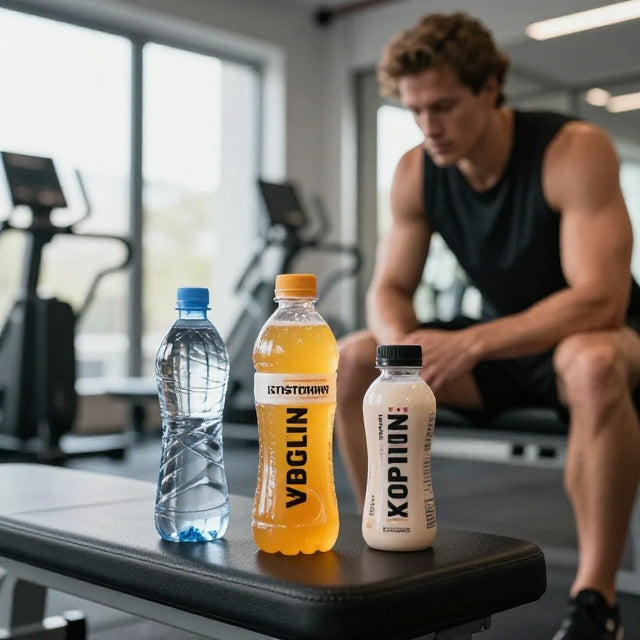
For many shorter or lower-intensity workouts, water is a perfectly practical choice. Longer or more demanding sessions may create additional needs for carbohydrates and electrolytes, particularly when substantial sweat losses occur. Sports nutrition guidance therefore focuses on matching fluid and nutrient intake to the demands of the session rather than recommending one drink for everyone.
So, what are the best drinks for workout sessions? The answer depends on what you are trying to achieve and what your body needs before, during and after training.
Why What You Drink During Exercise Matters
Exercise increases fluid loss through sweating and breathing. If fluid losses become substantial, dehydration can affect exercise comfort and performance. At the same time, drinking far more than you need is not necessarily better, particularly when large amounts of plain water are consumed without considering electrolyte losses.
Sweat rates can vary considerably between people. They can also change according to body size, exercise intensity, temperature, humidity, clothing and training duration. For this reason, there is no single fluid intake that works perfectly for every athlete.
Your drink can potentially provide several things:
-
Fluid to replace water lost through sweating
-
Electrolytes, particularly sodium, when sweat losses are significant
-
Carbohydrates to provide fuel during prolonged or demanding exercise
-
Protein after training when it helps you meet your overall protein requirements
-
Caffeine, in appropriate situations, when a caffeinated product fits your individual nutrition and performance strategy
The important point is that these functions are different. A hydration drink, carbohydrate drink and protein shake are designed around different nutritional purposes.
Best Drinks Before a Workout
What to drink before workout
For most people, the priority before exercise is starting the session adequately hydrated. Water and normal food and fluid intake can be enough for many everyday training sessions.
If you are preparing for a longer or harder workout, particularly in warm conditions, paying more attention to hydration before starting can be useful. The American College of Sports Medicine recommends beginning exercise adequately hydrated and notes that pre-exercise fluid intake may be adjusted according to individual circumstances.
A carbohydrate-containing drink can also have a place before prolonged or demanding exercise when additional carbohydrate is useful and convenient. This is more relevant to endurance-focused sessions than to every short gym workout.
Caffeinated or energised drinks may be considered by people who tolerate caffeine well and have a reason to use it. However, caffeine is not automatically necessary for a good workout, and individual tolerance, timing and total caffeine intake matter.
For a simple gym session, there is usually no need to make hydration unnecessarily complicated: start well hydrated and choose a drink you tolerate comfortably.
Best Drinks During a Workout
Water
Water is often the simplest choice for short, light or moderate workouts, especially when you have eaten normally and are not losing large amounts of fluid.
A 30–60 minute gym session, easy run or general fitness workout may not require carbohydrates or specialised sports nutrition. Drinking according to thirst and the conditions of the session can be a practical approach for many people.
Isotonic and sports drinks
Isotonic drinks combine fluid with ingredients such as carbohydrates and electrolytes. They can be useful when you need more than plain water, particularly during longer or more demanding sessions.
Sports drinks can be especially practical for endurance activities because they can provide fluid and carbohydrate at the same time. Sports nutrition guidance recognises that carbohydrate-electrolyte drinks can be beneficial in certain longer-duration exercise situations.
However, a sports drink is not automatically better than water for every workout. If the session is short and your main requirement is simply fluid, adding carbohydrates may provide little additional value.
Carbohydrate drinks
During prolonged exercise, carbohydrates can help provide an external fuel source when muscle carbohydrate availability becomes increasingly important.
For longer and intense endurance sessions, carbohydrate drinks can therefore be part of a broader fueling strategy. The exact amount needed depends on exercise duration, intensity, the athlete's goals and what else is being consumed during the session.
This is one reason carbohydrate drinks for exercise are more relevant to a long cycling session or endurance event than to a short strength workout.
Electrolyte drinks
Electrolytes, especially sodium, are lost in sweat. The amount varies significantly between individuals.
For people who sweat heavily, exercise for a long time or train in hot conditions, an electrolyte-containing drink can be useful. The goal is not to consume as many electrolytes as possible, but to match the product and intake strategy to the demands of the workout. Individualised fluid replacement is recommended because sweat rate and sweat electrolyte concentration vary considerably.
Best Drinks After a Workout
What to drink after workout
After exercise, the priorities are generally rehydration and recovery. Water can be enough when fluid losses are modest and your normal meals will provide the nutrients you need.
After a hard, long or particularly sweaty session, replacing fluids and electrolytes becomes more important. If rapid rehydration is required, the overall amount and composition of what you drink should reflect the fluid and electrolyte deficit created by the workout.
A protein drink after workout can also be convenient when you need to increase your protein intake. Protein contributes to the maintenance and growth of muscle, while adequate nutrition after exercise also supports recovery. Importantly, a protein shake is not compulsory: it is simply one convenient way of meeting nutritional needs.
For endurance athletes or people facing another demanding training session soon, carbohydrates may also be important after exercise to help replenish glycogen stores. In that situation, a recovery drink containing both carbohydrate and protein may be convenient, although a normal meal can serve the same overall purpose.
How to Choose the Best Workout Drink
There is no universal winner when it comes to workout drinks. Instead, think about the demands of the session.
| Training situation | Drink consideration |
|---|---|
| Short or light workout | Water may be sufficient |
| Typical gym session | Water is often practical; additional nutrition depends on the session and overall diet |
| Longer workout | Fluids and, depending on sweat losses, electrolytes may be useful |
| Intense endurance session | Fluids plus carbohydrates and electrolytes may be useful |
| Hot or humid conditions | Pay greater attention to fluid and electrolyte losses |
| Heavy sweating | An electrolyte-containing drink may be useful |
| Post-workout recovery | Fluids plus protein and/or carbohydrates depending on recovery needs |
These are general principles rather than rigid prescriptions. Your individual sweat rate, diet, training load and environment all influence what makes sense.
Sports Drinks, Isotonic Drinks and Protein Drinks: What's the Difference?
Understanding the purpose of each drink makes choosing easier.
Sports drinks are generally designed to combine hydration with carbohydrates and/or electrolytes. They are particularly useful when exercise creates a need for fluid and fuel at the same time.
Isotonic drinks are formulated to provide fluid along with carbohydrates and electrolytes in a concentration intended for use during physical activity. They can be convenient during longer or more demanding workouts.
Carbohydrate drinks focus primarily on supplying carbohydrate. They can be useful when training duration and intensity create a meaningful need for additional carbohydrate during exercise.
Protein drinks serve a different purpose. They are primarily a convenient source of protein and can be useful after training when dietary protein needs are not easily met through a meal.
These products are therefore not interchangeable. Choosing between them should start with the question: What does this workout actually require?
Common Workout Hydration Mistakes
One of the most common mistakes is assuming that every workout requires a sports drink. It doesn't. For many shorter sessions, water and a balanced diet are enough.
Other mistakes include:
-
Drinking too little during long or hot sessions
-
Drinking excessively without considering individual sweat losses
-
Choosing a high-carbohydrate drink when additional carbohydrate is unnecessary
-
Ignoring the effect of heat and humidity on sweat loss
-
Waiting until the end of a long workout to think about hydration
-
Introducing an unfamiliar drink for the first time during an important competition
-
Assuming that more electrolytes automatically means better hydration
-
Treating sports drinks as a replacement for an overall balanced diet
Competition nutrition should be practised during training. The IOC also recommends that athletes trial supplements and sports nutrition products thoroughly in training before relying on them in competition.
How Much Should You Drink During Exercise?
There is no single number that applies to every person or every workout.
Fluid requirements depend on:
-
Body size
-
Sweat rate
-
Exercise duration
-
Exercise intensity
-
Temperature
-
Humidity
-
Clothing and equipment
-
Individual tolerance
One useful way to understand your own needs is to monitor body weight before and after a representative training session and consider how much fluid you consumed during that session. This can help estimate your approximate sweat losses. The ACSM notes that individual sweat rates can be estimated in this way and recommends personalised fluid replacement because sweat losses vary substantially between people.
Avoid turning hydration into a competition. The goal is to manage fluid losses appropriately, not simply to drink as much as possible.
Best Drinks for Different Training Goals
The best drinks for workout sessions can look very different depending on the type of training.
Strength training: Water is often sufficient for hydration. After training, a protein shake can be convenient if it helps you meet your daily protein requirements.
Running: Short runs may only require water, while longer runs can create greater fluid, carbohydrate and electrolyte demands.
Cycling: Longer rides can benefit from drinks that combine hydration and carbohydrate, particularly when access to food and fluids is limited.
Endurance training: Longer sessions place greater emphasis on fluid, carbohydrate and electrolyte planning.
High-intensity training: Hydration remains important, but the need for carbohydrate during the session depends heavily on duration and the overall training plan.
Long-duration workouts: A combination of fluids, carbohydrates and electrolytes may be useful when the session creates significant sweat and fuel losses.
Recovery: Water supports rehydration, while protein and carbohydrate can be incorporated according to the individual's recovery and nutritional requirements.
The key is to match the drink to the session rather than choosing a product simply because it is marketed as a performance drink.
How Performance.be Can Fit Into Your Workout Nutrition Routine
Performance.be can be used as part of a broader sports nutrition routine, with different products serving different purposes.
For hydration-focused training, relevant sports drinks and isotonic drinks can be considered. The current BQNP catalogue includes MP3 Sportsdrink Isotonic and MP3 Sportsdrink Sportwater among its sports drink range.
For sessions where carbohydrate intake is a consideration, the current range also includes MP3 Sports Drinks Carbocharger, a ready-to-drink carbohydrate-based sports beverage.
For post-workout protein, Performance.be can internally link readers to its protein supplements, whey protein and ready-to-drink protein shakes. The existing range includes Performance Sports Nutrition Whey Protein Isolate and NJIE Propud Shake.
The important thing is to use these products according to the demands of your training and overall diet. A sports drink is not required simply because you are exercising, and a protein shake does not replace the value of a balanced diet.
Frequently Asked Questions
What is the best drink for a workout?
For many short or moderate workouts, water is a practical choice. Longer or more demanding sessions may benefit from drinks containing carbohydrates and/or electrolytes, depending on sweat losses and training demands.
Is water enough for a workout?
Often, yes. Water can be sufficient for many shorter or lower-intensity workouts. The need for carbohydrates and electrolytes becomes more relevant as exercise duration, intensity, sweat loss or environmental heat increases.
What should I drink before exercise?
Start adequately hydrated. Water is suitable for many workouts, while a carbohydrate-containing or caffeinated drink may have a role in specific training situations depending on the session, nutrition plan and individual tolerance.
What should I drink during a long workout?
For longer workouts, especially endurance sessions, consider a combination of fluid, carbohydrates and electrolytes when appropriate. The right amount depends on your sweat rate, exercise intensity, duration and environment.
Are sports drinks useful during exercise?
They can be useful when you need both fluid and additional carbohydrate or electrolytes, particularly during prolonged or demanding exercise. They are not necessary for every workout.
What should I drink after a workout?
Water can support normal rehydration. After a long or sweaty workout, an electrolyte-containing drink may be useful. If protein intake is needed, a protein shake or protein-rich meal can help meet recovery nutrition goals.
Are protein drinks good after exercise?
Protein drinks can be a convenient way to consume protein after exercise. They are particularly useful when a normal meal is not convenient or when they help you reach your overall daily protein target. They are an option rather than a requirement.
Final Takeaway
The best workout drink is the one that matches the demands of your training.
For a short gym session, that may simply mean water. For a long run, ride or endurance session, you may need a more structured combination of fluids, carbohydrates and electrolytes. After demanding training, hydration plus appropriate protein and carbohydrate intake can support the recovery process.
Instead of asking which drink is universally best, ask what your workout requires. That simple change in approach can make workout hydration more practical, personalised and effective.