
Focus Keyword: plant-based protein vs whey protein
Introduction
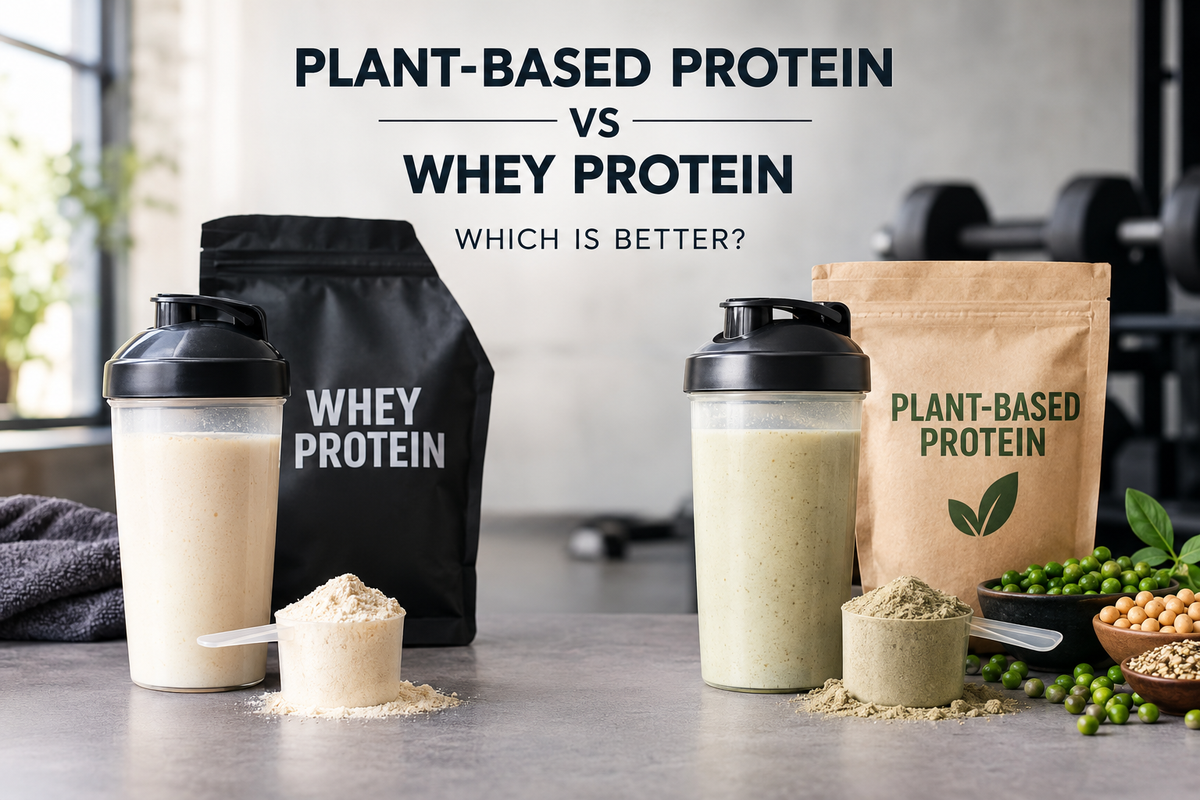
Protein is essential for muscle growth, exercise recovery and maintaining overall health. Whether you are a beginner starting at the gym, an experienced athlete or someone following a vegan diet, getting enough protein can help you support your fitness goals. However, choosing a supplement can be confusing, particularly when comparing plant-based protein vs whey protein.
Whey protein is derived from milk and is widely used because of its high essential amino acid content and convenient digestibility. Plant-based protein, on the other hand, is made from sources such as peas, soy, rice and hemp. It offers an alternative for people following vegan diets or avoiding dairy.
So, which is better? The answer depends on your dietary preferences, digestive tolerance, training routine and overall protein intake. Both options can contribute to muscle development when used appropriately. Understanding their differences will help you choose the best protein powder for your individual needs.
What Is Whey Protein?
Whey protein is a high-quality dairy protein obtained during cheese production. It contains all nine essential amino acids, which the body cannot produce in sufficient quantities and must obtain from food.
Whey is particularly popular among athletes because it provides a concentrated source of protein, is convenient to prepare and naturally contains substantial amounts of leucine, an amino acid involved in stimulating muscle protein synthesis.
There are three common types of whey protein:
-
Whey protein concentrate: Contains protein alongside varying amounts of lactose, fat and other milk components. Its protein concentration depends on the formulation.
-
Whey protein isolate: Processed to contain a higher proportion of protein, typically with less lactose and fat than concentrate.
-
Whey protein hydrolysate: Partially broken down into smaller protein fragments to facilitate digestion. It may be more expensive and is not automatically superior for every user.
Each formulation has different nutritional characteristics, flavours and costs. The most suitable option depends on your requirements and the product's actual label.
For gym enthusiasts who tolerate dairy, whey protein supplements can be a practical way to increase daily protein intake without preparing another complete meal. However, whey is not essential for muscle growth, and a balanced diet can provide the protein needed for training.
What Is Plant-Based Protein?
Plant-based protein powder is produced from plant ingredients, including legumes, grains, seeds and other protein-rich sources. It is especially useful for vegans, people avoiding dairy and individuals who prefer plant-derived nutrition.
Common plant protein sources include:
-
Pea protein: Provides a useful amount of protein and essential amino acids, although its amino acid proportions differ from whey.
-
Soy protein: A complete protein containing all nine essential amino acids. Soy isolate is a popular option for plant-based sports nutrition.
-
Rice protein: Provides protein but is relatively low in lysine, making it useful to combine with complementary protein sources.
-
Hemp protein: Contains protein alongside varying amounts of fibre and fat, depending on processing.
-
Blended plant proteins: Combine ingredients such as pea and rice to improve the overall amino acid balance.
Plant-based protein benefits include suitability for vegan diets, freedom from dairy-derived protein and flexibility when choosing ingredients. However, plant proteins differ in digestibility and amino acid composition, so they should not all be treated as nutritionally identical.
A well-formulated vegan protein powder can support muscle repair and growth when the serving provides enough protein and essential amino acids. Checking the ingredient list and nutrition information is more useful than relying on the words “plant-based” or “vegan” alone.
Plant-Based Protein vs Whey Protein: Key Differences
The main differences between plant protein and whey protein concern their source, amino acid composition, digestibility and suitability for particular diets.
| Factor | Whey Protein | Plant-Based Protein |
|---|---|---|
| Protein source | Milk | Peas, soy, rice, hemp and other plants |
| Essential amino acids | Complete profile | Varies by source; soy is complete, and blends can complement amino acid profiles |
| Leucine content | Generally high | Varies by source and formulation |
| Digestibility | Generally high | Varies by ingredient, processing and formulation |
| Muscle-building potential | Effective when paired with adequate nutrition and training | Can also support muscle growth when intake and amino acid quality are adequate |
| Lactose | Concentrate usually contains more than isolate | Naturally dairy-free if no dairy ingredients are added |
| Vegan suitability | Not suitable | Suitable when all ingredients meet vegan requirements |
| Texture and taste | Often creamy, depending on formulation | Can be earthy, grainy or creamy, depending on the ingredients |
| Allergens | Milk allergy concern | May contain soy or other allergens; check labels |
| Label considerations | Protein content, lactose, ingredients and serving size | Protein content, blend composition, allergens and serving size |
Neither protein type is automatically the best choice for everyone. Whey offers a convenient, leucine-rich source of protein, while plant-based formulations provide flexibility for people with different dietary requirements.
Which Protein Is Better for Muscle Growth?
When comparing plant protein vs whey protein for muscle gain, the most important considerations are total daily protein intake, essential amino acid availability and consistent resistance training.
Whey protein is an effective option because it provides all essential amino acids and a relatively high amount of leucine. These characteristics make it particularly convenient for stimulating muscle protein synthesis, the process through which the body builds and repairs muscle proteins.
However, plant protein can also support muscle growth. Soy protein has a complete essential amino acid profile, while carefully formulated plant blends can provide a balanced combination of amino acids. Some plant-based products may require a larger serving to deliver a comparable amount of protein or leucine.
Research generally supports both animal and plant protein as useful sources for muscle health, although results vary by protein type, dose and study population. A 2025 systematic review found no significant difference between soy and milk protein for muscle mass in the included trials, while some non-soy plant proteins produced less favourable results than animal proteins. A 2026 review of muscle protein synthesis found broadly similar responses in younger adults, but highlighted uncertainty due to limited evidence. Sources: systematic reviews in Nutrition Reviews and the Journal of the Academy of Nutrition and Dietetics.
For many exercising adults, approximately 1.4–2.0 grams of protein per kilogram of body weight per day is a useful range, depending on training demands and goals. This includes protein from all foods and supplements, not just protein shakes. The International Society of Sports Nutrition provides further guidance on protein and exercise.
For example, a person weighing 70 kg might aim for approximately 98–140 g of protein daily. The right amount depends on individual circumstances, and people with relevant medical conditions should seek personalised professional advice.
Remember that protein alone does not guarantee muscle gain. Progressive resistance training, adequate energy intake, sufficient sleep and recovery all contribute to results.
Which Protein Is Easier to Digest?
Digestive comfort varies from person to person, so neither whey nor plant protein is universally easier to digest.
Whey concentrate contains varying amounts of lactose, the naturally occurring sugar in milk. People with lactose intolerance may experience bloating, gas or discomfort after consuming products containing enough lactose to trigger their symptoms.
Whey isolate typically contains less lactose than concentrate and may be better tolerated by some people with lactose intolerance. However, it remains a milk-derived protein. People with a milk protein allergy should not assume that whey isolate is safe.
Plant-based protein powders are naturally free from dairy protein when made exclusively from plant ingredients. Nevertheless, some formulations contain added fibres, sugar alcohols, sweeteners or other ingredients that can cause digestive discomfort in sensitive individuals.
If you experience digestive problems, consider the protein source, serving size and full ingredient list. Start with an appropriate serving and assess your tolerance rather than assuming that every product in the same category will affect you identically.
Which Protein Is Better for Vegans and People with Dietary Restrictions?
Plant-based protein is the straightforward choice for people following a vegan diet because whey is derived from milk. Soy, pea and blended vegan protein powders can help vegans meet their daily protein needs while fitting into their preferred dietary pattern.
Vegetarians who consume dairy can choose either option, depending on personal preference and tolerance. People with lactose intolerance may find a suitable plant protein more comfortable, although some can tolerate whey isolate.
When choosing a protein powder, check:
-
The full ingredient list and allergen declaration.
-
Whether the product contains milk, soy or other ingredients you need to avoid.
-
Whether a vegan claim or certification is provided when relevant.
-
The amount of protein per serving and the amino acid profile, where available.
-
Any independent testing or quality assurance information supplied by the manufacturer.
For consumers in Belgium, check the product packaging and information supplied by the seller, including relevant allergen details. If you have a serious allergy, do not rely solely on front-of-pack claims; seek clarification from the manufacturer when necessary.
Protein Quality, Leucine and Amino Acids Explained
Understanding a few nutritional terms makes choosing between whey protein and vegan protein easier.
Essential amino acids: These are nine amino acids that the body must obtain from the diet. All are needed to build and maintain body proteins.
Complete protein: A protein source that provides all nine essential amino acids. Whey and soy protein are examples. The term does not mean that every amino acid is present in identical quantities.
Leucine: An essential amino acid that helps activate the processes involved in muscle protein synthesis. Whey generally contains more leucine per gram of protein than many individual plant proteins, although the exact amount varies.
Digestibility and bioavailability: These describe how protein is broken down, absorbed and made available for the body's use. Protein source, processing and the food matrix can influence these factors.
Protein concentration: The amount of protein supplied by a product relative to its serving size or weight. A 40 g scoop does not necessarily contain 40 g of protein.
These measures should be considered together. A product with a strong amino acid profile is useful, but so is a serving that fits your daily needs, agrees with your digestive system and complements the rest of your diet. Plant-derived protein can make a meaningful contribution to muscle development without being identical to whey.
How to Choose the Right Protein Powder for Your Goals
The best protein powder for athletes is the one that meets their nutritional needs, fits their dietary preferences and can be used consistently as part of a balanced diet.
For muscle gain: Whey is a convenient choice if you tolerate dairy and want a protein source naturally rich in leucine. A well-formulated pea, soy or blended plant protein can also be suitable.
For vegan nutrition: Choose a clearly labelled vegan protein powder. Consider soy or a complementary plant protein blend, and check the protein content and ingredients.
For lactose intolerance: Look for a plant-based option or consider whether a low-lactose whey isolate suits your tolerance. Avoid whey if you have a milk protein allergy unless a qualified healthcare professional specifically advises otherwise.
For taste and convenience: Choose a flavour and texture you enjoy, and check how well the product mixes with water or your preferred milk alternative. A supplement you find easy to use is more practical than one you dislike.
For value: Compare the cost per gram of actual protein rather than the price per tub or scoop. Also consider serving size and how much of the product you will realistically use.
For product quality: Review the nutrition panel, ingredients, allergen information and any credible third-party testing or quality assurance. Avoid relying on vague claims such as “premium”, “clean” or “ultimate muscle builder” without supporting information.
Protein powder is a supplement, not a requirement. Foods such as eggs, dairy products, beans, lentils, tofu, fish, meat and other protein-rich options can also contribute to your daily intake, depending on your diet.
Common Myths About Plant-Based Protein and Whey Protein
Myth 1: Plant protein cannot build muscle effectively.
Plant protein can support muscle growth when total protein intake, essential amino acids and training are adequate. Protein source and formulation matter, but plant-derived protein is not inherently ineffective.
Myth 2: Whey is always better than plant protein.
Whey has advantages in leucine content and protein quality, but dietary restrictions, tolerance, cost and personal preference matter. Some plant proteins, particularly soy, compare favourably with dairy proteins in research.
Myth 3: Everyone needs protein supplements to gain muscle.
Not necessarily. Many people can meet their protein needs through ordinary foods. Supplements are useful when convenience or dietary circumstances make adequate intake harder.
Myth 4: More protein powder means faster muscle growth.
Excess protein does not guarantee faster results. Once nutritional needs are met, training quality, overall energy intake and recovery remain important.
Myth 5: Plant protein is always easier to digest.
Digestive tolerance depends on the individual, ingredients, processing and serving size. Some people tolerate whey well, while others prefer plant-based alternatives.
Myth 6: All vegan protein powders have the same amino acid profile.
Pea, soy, rice and hemp proteins differ in their amino acid composition. Blends can help complement individual sources, so product labels matter.
Frequently Asked Questions
1. Is plant-based protein as effective as whey protein for building muscle?
Yes, plant-based protein can support muscle growth when consumed in sufficient quantities and combined with resistance training. Whey has a naturally high leucine content and a well-balanced essential amino acid profile, but soy and well-formulated plant blends can also be effective. The quality of the product and your total daily protein intake both matter.
2. Which protein powder has more leucine?
Whey protein generally provides more leucine per gram of protein than many individual plant protein sources. However, leucine content varies by ingredient and formulation. Some plant-based blends can provide useful amounts of leucine and essential amino acids, particularly when the serving size is adjusted to meet individual needs.
3. Is plant-based protein better for people with lactose intolerance?
Plant-based protein is naturally dairy-free when the product contains no dairy ingredients, making it a useful option for people avoiding lactose. Whey isolate usually contains less lactose than whey concentrate, but tolerance varies. People with a milk protein allergy should avoid assuming that lactose-reduced whey is safe.
4. Can vegans build muscle using plant-based protein powder?
Yes. Vegans can build muscle with plant-based protein powders alongside protein-rich foods, sufficient energy intake and progressive resistance training. Soy protein and complementary blends are useful options. Paying attention to total protein intake, essential amino acids, training consistency and recovery is more important than relying on a single supplement.
5. How much protein should I consume per serving?
A serving containing around 20–40 g of protein is a practical reference for many exercising adults, although requirements vary with body size, age, training and the rest of the diet. Consider the amount of actual protein rather than the scoop's total weight, and spread protein intake across meals throughout the day.
6. Should I choose whey protein or plant protein for everyday use?
Choose whey if you tolerate dairy and value its high leucine content and convenient protein delivery. Choose plant-based protein if you follow a vegan diet, avoid dairy or prefer plant-derived ingredients. Either can complement a balanced diet. Compare labels, protein content, allergens, taste and cost to find an option that suits you.
Conclusion: Plant-Based Protein vs Whey Protein — Which Should You Choose?
The choice between plant-based protein vs whey protein ultimately depends on your goals, dietary preferences and individual tolerance.
Whey protein is a convenient, high-quality option for people who consume dairy and want a protein source rich in essential amino acids and leucine. Plant-based protein offers a flexible alternative for vegans, people avoiding dairy and anyone who prefers plant-derived nutrition. Soy protein and well-formulated plant blends can provide useful amino acid profiles to support muscle development.
Neither supplement replaces a balanced diet, consistent resistance training, sufficient sleep or adequate recovery. Focus on meeting your overall protein needs, selecting a product you tolerate well and maintaining a routine that fits your lifestyle.
Performance aims to help fitness enthusiasts make informed sports nutrition choices. By understanding the differences between protein sources and checking product labels carefully, you can choose a supplement that supports your training and fits your everyday nutrition.