
Introduction
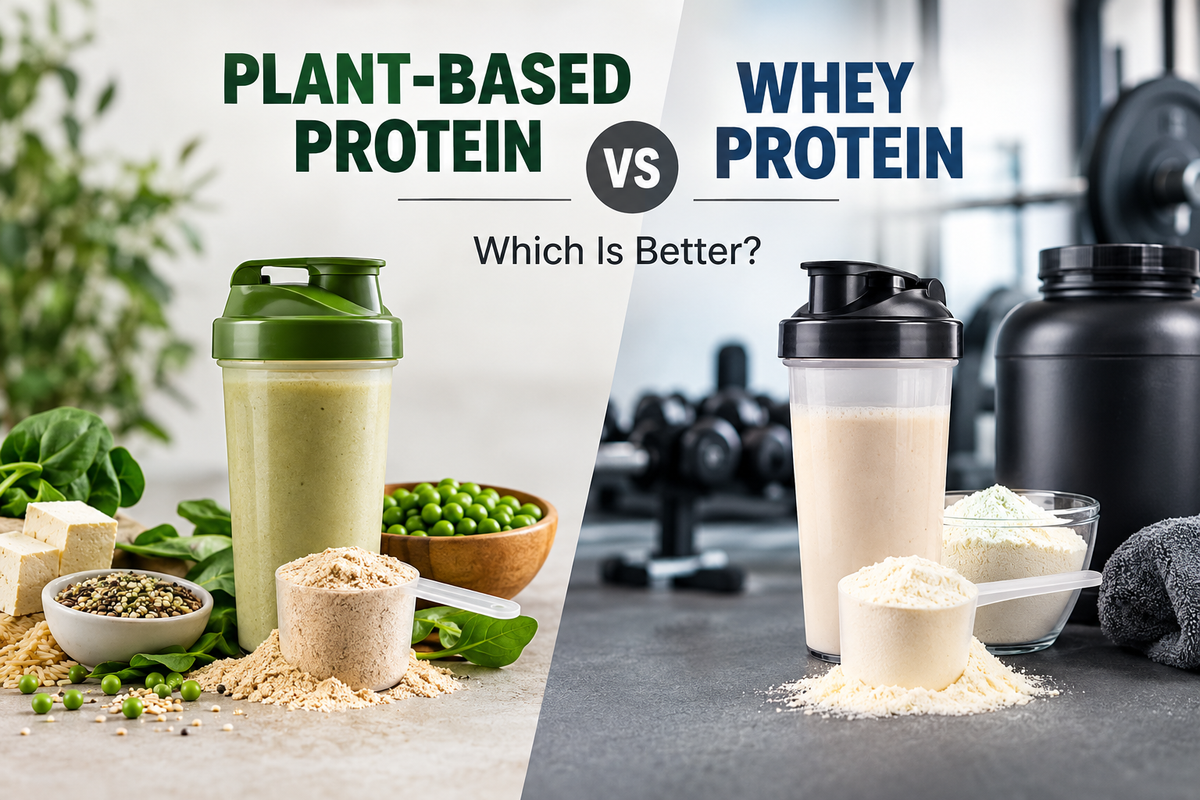
Choosing between plant-based protein vs whey protein is a common question for gym enthusiasts, athletes, bodybuilders, and anyone looking to improve their daily nutrition. Both can help you meet your protein requirements, support muscle recovery, and complement a structured training programme. However, they differ in their sources, amino acid profiles, digestibility, and suitability for different dietary preferences.
Whey protein is derived from milk and is known for its high-quality protein content and naturally rich supply of essential amino acids. Plant-based protein powders, meanwhile, are made from sources such as peas, soy, rice, and hemp, offering alternatives for vegans and people who prefer to avoid dairy.
So, which is better? The answer depends on your goals, total daily protein intake, digestive tolerance, and personal preferences. Understanding these differences can help you choose a protein powder for muscle growth that fits your lifestyle rather than simply following the latest fitness trend.
What Is Whey Protein?
Whey protein is a milk-derived protein separated during cheese production. It contains all nine essential amino acids, which the body needs to build and maintain muscle but cannot produce on its own.
There are three common forms:
-
Whey protein concentrate: Contains protein alongside varying amounts of lactose, carbohydrates, and fat. It is often a practical everyday option.
-
Whey protein isolate: Undergoes additional processing to increase protein concentration and generally reduce lactose and fat.
-
Whey protein hydrolysate: Is partially broken down into smaller protein fragments to facilitate digestion and absorption. Its advantages depend on the formulation and intended use.
Whey is particularly rich in leucine, an essential amino acid that helps stimulate muscle protein synthesis, the process through which the body repairs and builds muscle tissue.
Its convenient preparation, complete amino acid profile, and generally high digestibility make it popular among athletes and gym enthusiasts. If you are comparing dairy-based supplements, explore Performance Sports Nutrition Whey Protein Isolate and review its nutritional information and ingredients before choosing a product.
What Is Plant-Based Protein?
Plant-based protein powder is made from protein-rich plant ingredients. Common sources include:
-
Pea protein: Provides a substantial amount of protein and is frequently used in vegan supplements.
-
Soy protein: A complete protein containing all nine essential amino acids.
-
Rice protein: A dairy-free option that can complement other plant proteins.
-
Hemp protein: Supplies protein alongside varying amounts of fibre and fat.
-
Blended plant proteins: Combine ingredients such as pea and rice to improve the overall amino acid profile.
Plant proteins differ in their digestibility and amino acid composition. For example, some sources provide relatively less of particular essential amino acids, while complementary blends can help address these differences.
A well-formulated vegan protein powder for muscle building can contribute meaningfully to muscle repair and growth when consumed in adequate quantities alongside sufficient energy and regular resistance training.
Plant protein is especially useful for vegans, people avoiding dairy, and consumers who prefer plant-derived ingredients. However, the term “plant-based” alone does not guarantee a particular protein content or nutritional quality, so checking the label remains essential.
Plant-Based Protein vs Whey Protein: Key Differences
The following table summarises the main differences between whey and plant protein.
| Feature | Whey protein | Plant-based protein |
|---|---|---|
| Source | Milk | Peas, soy, rice, hemp, and other plants |
| Essential amino acids | Complete profile | Varies by source; soy is complete |
| Leucine content | Generally high | Varies by ingredient and blend |
| Digestibility | Generally high | Varies by source and formulation |
| Muscle-building potential | Effective when intake and training are adequate | Effective when intake, protein quality, and training are adequate |
| Lactose | Concentrate may contain lactose; isolate usually contains less | Naturally dairy-free, provided other ingredients do not introduce dairy |
| Vegan suitability | Not suitable | Suitable when all ingredients meet vegan requirements |
| Taste and texture | Often creamy and smooth | May be earthy, grainy, or thicker, depending on the blend |
| Allergens | Milk protein allergy is a concern | Soy and other ingredient-specific allergens may be present |
| Convenience | Easy to mix into shakes and meals | Equally convenient when the flavour and texture suit you |
Neither option is automatically superior for every individual. Whey protein benefits include its high leucine content and complete amino acid profile, while plant-based protein benefits include dairy-free options and compatibility with vegan diets.
Which Protein Is Better for Muscle Growth?
For most exercising adults, muscle growth depends on several factors: total daily protein intake, progressive resistance training, adequate calories, sleep, and recovery. Choosing a supplement is only one part of the process.
Research comparing plant and animal proteins suggests that protein source can influence outcomes, but the differences depend on the specific proteins, amounts consumed, participants, and training conditions. A 2025 systematic review and meta-analysis found a small overall advantage for animal protein in muscle mass, but no significant overall difference in muscle strength. It also found similar muscle-mass outcomes for soy and milk protein in the studies comparing them. These findings support a nuanced rather than absolute conclusion.
Whey can be a convenient option because it supplies all essential amino acids and typically delivers a substantial amount of leucine per serving. This makes it useful after resistance training or whenever you need a practical way to increase protein intake.
However, plant protein can also support muscle development. Choosing a high-quality soy protein or a complementary plant blend and consuming enough protein can help address differences in amino acid composition.
For many healthy, physically active adults, approximately 1.4–2.0 grams of protein per kilogram of body weight per day is a useful evidence-based range. This includes protein from all foods and supplements, not just shakes. Individual needs may vary with training intensity, goals, energy intake, age, and health status.
For more personalised planning, read Performance's guide to how much protein you need to build muscle.
Which Protein Is Easier to Digest?
Whey protein digestion depends partly on the formulation and the individual consuming it. Whey concentrate generally retains more lactose than whey isolate, so some people with lactose intolerance may find isolate easier to tolerate.
However, whey isolate remains milk-derived. People with a milk protein allergy should not assume that isolate is safe, even if its lactose content is low.
Plant protein is naturally dairy-free, but it is not automatically easier to digest. Some people tolerate pea or soy protein well, while others experience bloating or discomfort. Added fibres, sugar alcohols, sweeteners, thickeners, and serving size can also affect digestive comfort.
If you experience digestive symptoms, check the ingredient list, try a smaller serving if appropriate, and assess your response. Persistent or severe symptoms warrant advice from a healthcare professional.
Which Protein Is Better for Vegans and People with Dietary Restrictions?
For vegans, plant-based protein is the appropriate choice because whey comes from milk. Soy, pea, rice, and blended plant proteins offer different ways to increase protein intake without dairy.
Vegetarians who consume dairy may choose either option according to preference and tolerance. People with lactose intolerance can consider suitable plant proteins or potentially better-tolerated dairy formulations, while those with milk protein allergies must avoid whey.
Belgian consumers should check the full ingredient list, allergen declarations, and any relevant vegan or quality certifications on the product packaging. Pay attention to cross-contact warnings if you have an allergy. A vegan label, for example, does not automatically mean a product is free from soy or other allergens.
Protein Quality, Leucine, and Amino Acids Explained
Understanding a few nutritional terms makes comparing protein powders easier.
Essential amino acids: These are nine amino acids that must come from food or supplements. All are required for normal protein synthesis.
Complete protein: A protein that provides all nine essential amino acids. Whey and soy are examples, although the amounts of individual amino acids still matter.
Leucine: An essential amino acid that plays an important role in stimulating muscle protein synthesis. Whey is generally leucine-rich, but the amount supplied by a plant protein depends on its source, concentration, and serving size.
Digestibility and bioavailability: These describe how effectively protein is digested, absorbed, and made available for the body's use.
Protein concentration: This is the amount of protein in a given weight of powder. Two products with identical scoop sizes may provide different quantities of protein.
When comparing a plant protein amino acid profile with whey, consider the actual grams of protein per serving, the full essential amino acid profile, and the overall diet. A larger serving or a complementary plant blend may help compensate for differences in protein concentration or amino acid composition.
Animal-derived protein is not essential for muscle growth; adequate, well-planned nutrition is what matters.
How to Choose the Right Protein Powder for Your Goals
Use these practical guidelines when choosing the best protein powder for athletes or everyday gym-goers.
-
For muscle gain: Choose a product that helps you meet your daily protein target, provides a suitable amount of protein per serving, and fits comfortably into your diet. Whey is convenient, while a quality plant blend can also work well.
-
For vegan diets: Select a fully plant-based formula and check that every ingredient meets your dietary requirements.
-
For lactose intolerance: Consider a suitable whey isolate or a dairy-free alternative, depending on your tolerance. Avoid whey altogether if you have a milk protein allergy.
-
For taste and convenience: Look for a flavour, texture, and mixing method you will enjoy using consistently.
-
For value: Compare the price per gram of actual protein rather than the price per tub or the scoop size alone.
-
For ingredient quality: Review the protein source, sweeteners, allergens, nutrition panel, and any independently verified quality-testing information. Competitive athletes may wish to prioritise recognised third-party sport certification where available.
The best protein powder for muscle growth is one that meets your nutritional needs, suits your preferences, and helps you maintain a consistent routine.
Common Myths About Plant-Based Protein and Whey Protein
Myth 1: Plant protein cannot build muscle effectively.
Plant protein can support muscle growth when the overall protein intake, amino acid supply, energy intake, and training programme are adequate.
Myth 2: Whey is always better than plant protein.
Whey has nutritional advantages, including a high leucine content, but soy and well-formulated plant blends are useful alternatives. The best choice depends on individual needs.
Myth 3: Everyone needs protein supplements to gain muscle.
No. Many people can meet their protein requirements through foods such as eggs, dairy, fish, meat, legumes, tofu, and lentils.
Myth 4: More protein powder automatically means faster muscle growth.
Excess protein does not replace progressive training, adequate calories, or recovery. Supplements should help fill nutritional gaps rather than be consumed without a plan.
Myth 5: Plant protein is always easier to digest.
Digestive tolerance varies with the protein source, formulation, ingredients, and individual.
Myth 6: All vegan protein powders have the same amino acid profile.
Different sources and blends provide different amounts of essential amino acids. Always compare the nutritional information.
Frequently Asked Questions
1. Is plant-based protein as effective as whey protein for building muscle?
Yes, plant protein can support muscle growth when the product provides sufficient protein and essential amino acids and is combined with appropriate resistance training. Whey offers a high-leucine, complete protein source, but soy and well-formulated plant blends can be effective alternatives.
2. Which protein powder has more leucine?
Whey protein generally contains more leucine per gram of protein than many individual plant proteins. However, amounts vary by ingredient and formulation. Check the amino acid information where available, and compare equivalent protein servings rather than equal scoop weights.
3. Is plant-based protein better for people with lactose intolerance?
Plant-based protein is naturally dairy-free and avoids lactose from milk ingredients. Some people with lactose intolerance can also tolerate whey isolate because it generally contains less lactose than concentrate. Neither option guarantees freedom from digestive symptoms, and milk allergies require a different level of caution.
4. Can vegans build muscle using plant-based protein powder?
Absolutely. Vegans can build muscle using soy protein, complementary plant blends, and protein-rich foods such as beans, lentils, tofu, and tempeh. The priorities are sufficient total protein, an appropriate essential amino acid intake, adequate calories, progressive resistance training, and recovery.
5. How much protein should I consume per serving?
A serving providing around 20–40 grams of protein is a practical range for many adults, depending on body size, training, and the rest of the day's meals. This is not a universal requirement. Plan servings around your total daily needs rather than relying on a fixed scoop size.
6. Should I choose whey protein or plant protein for everyday use?
Choose whey if you tolerate dairy and prefer its amino acid profile, taste, and convenience. Choose plant protein if you are vegan, avoid dairy, or prefer plant-derived ingredients. Both can fit into a balanced diet; consistency, nutritional quality, and personal tolerance matter most.
Conclusion:
When comparing plant-based protein vs whey protein, there is no single answer for everyone. Whey is a convenient, high-quality protein with a complete essential amino acid profile and naturally high leucine content. Plant-based protein offers a flexible alternative for vegans, people avoiding dairy, and anyone who prefers plant-derived nutrition.
For muscle gain, focus on sufficient daily protein, a balanced diet, consistent resistance training, and adequate recovery. Compare product labels, serving sizes, ingredients, allergens, and cost before making your choice.
Performance aims to help active people make informed sports nutrition decisions. Explore its existing protein resources and choose a supplement that complements your individual goals, dietary preferences, and training routine.